The shelter that wouldn’t let me stay
Season wrap-up, 2026 · October 2026 · First of a yearly series
ShelterCast is a free forecast tool for Appalachian Trail hikers: pick a stretch of trail and it gives you a night-by-night outlook adjusted for elevation. Every morning during hiking season it also posts something smaller to Bluesky: the three hottest shelters on the trail that day and the three coldest that night, forecast at each shelter’s own elevation. This summer, for the first time, it kept a record of what it posted. This is a look back through that record, and it starts with the shelter that kept showing up at the top.

In June 2023 I was hiking a section southbound from Punch Bowl Mountain Overlook to Daleville, and the plan for the first night was Matts Creek Shelter, just past the James River. I was making good time. I crossed the James on the footbridge, followed the river, and made the turn up toward the shelter.
It was closed. Aggressive bear activity. Nobody else was there, it was getting late, and there was no realistic place to stop farther south. So I did the thing I hate doing: I turned around, walked back along the river and across the bridge, and found a rocky outcrop on the north side with room for a tent. In the morning I retraced my steps, passed Matts Creek a second time, and kept going.
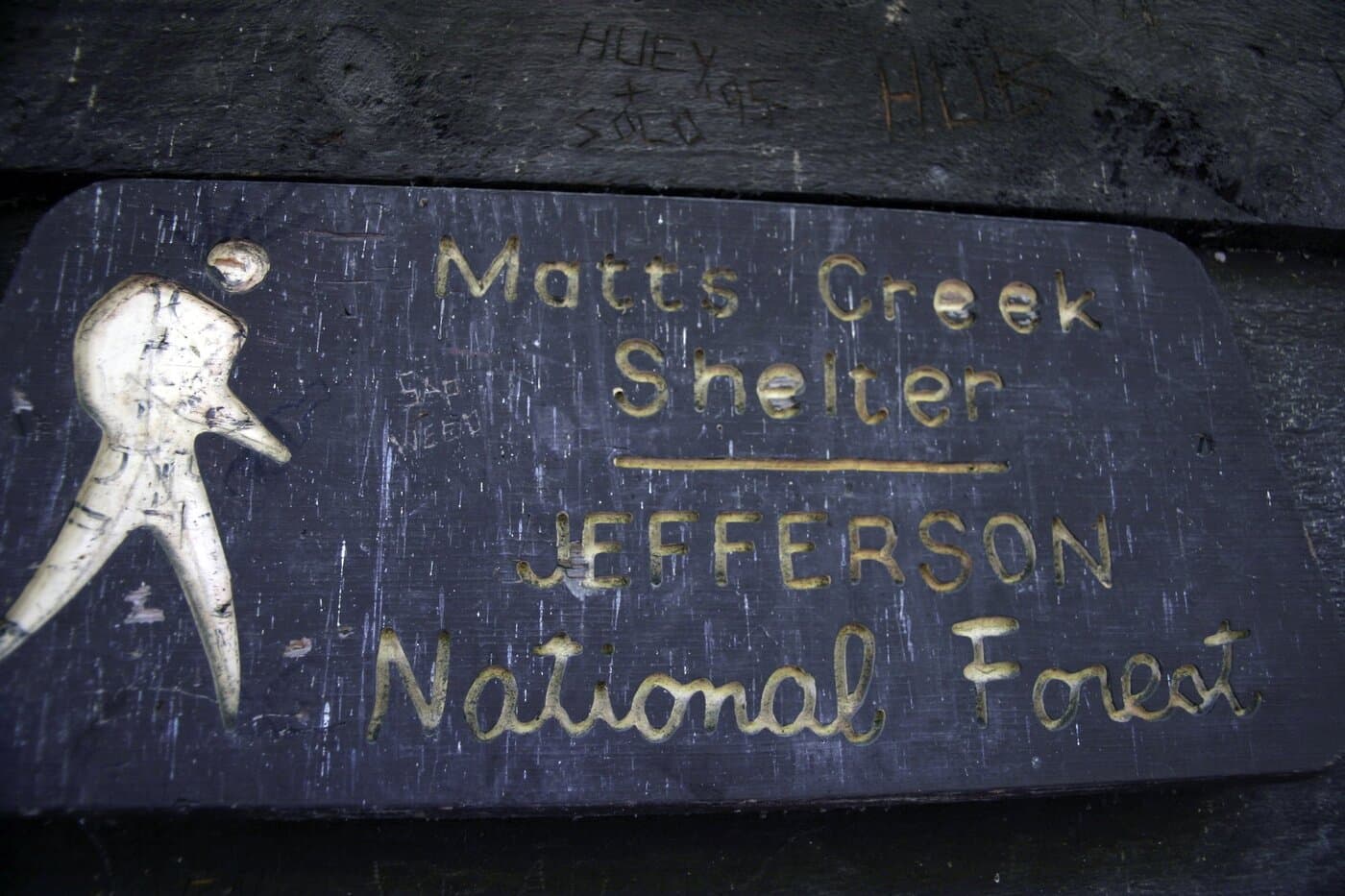
I didn’t know it then, but I’d just been turned away from the hottest shelter on the Appalachian Trail.
What the daily post saw
The daily post runs from March through September and considers every shelter that’s open, about 280 of them from Georgia to Maine. Each morning it forecasts the day’s high and the coming night’s low at every one of them and keeps the top three of each. The record it started keeping on July 10 covers 81 days, July 10 to September 30 (two days are missing, one because the log went live that morning and one because the post failed).
One caveat up front, because it shapes everything below. These are forecasts, not observations, and the log holds only each day’s top three per list. A shelter that finished fourth every day of the summer doesn’t appear here at all. What follows is a record of who made the podium.
Matts Creek Shelter, 55 of 81
Matts Creek Shelter made the hottest list on 66 of the 81 days and finished first on 55 of them. The next most frequent winner, Fontana Dam Shelter in North Carolina, won ten. Matts Creek held the top spot for eight straight days in August and stayed on the board for 18 consecutive days from mid-August into September. The season’s highest forecast high was its 99.4°F on July 16.
| Shelter | Days on list | #1 | Hottest high |
|---|---|---|---|
| Matts Creek Shelter VA | 66 | 55 | 99.4°F Jul 16 |
| Johns Hollow Shelter VA | 39 | 0 | 97.8°F Jul 16 |
| Fontana Dam Shelter NC | 26 | 10 | 92.2°F Sep 5 |
| Amicalola Falls (Max Epperson) Shelter GA | 20 | 6 | 92.7°F Sep 5 |
| Bryant Ridge Shelter VA | 16 | 0 | 94.8°F Jul 17 |
The reason is the river. Matts Creek sits at 915 feet, a few hundred yards up from the James, and the James is the lowest point on the trail in Virginia. The daily post is, in the end, an elevation ranking wearing a weather costume: on almost any summer day the hottest shelter is the lowest one, and the lowest one is Matts Creek. Virginia shelters took 64% of all hottest-list slots, and most of those were the James River valley.
Which brings me back to Johns Hollow, the shelter I’d walked past earlier that afternoon. It’s three trail miles north of the bridge at 1,132 feet, and it made the hottest list 39 times this summer. It finished first exactly zero times. Thirty-nine podiums, thirty-nine days of looking downhill at its neighbor.
The other crown
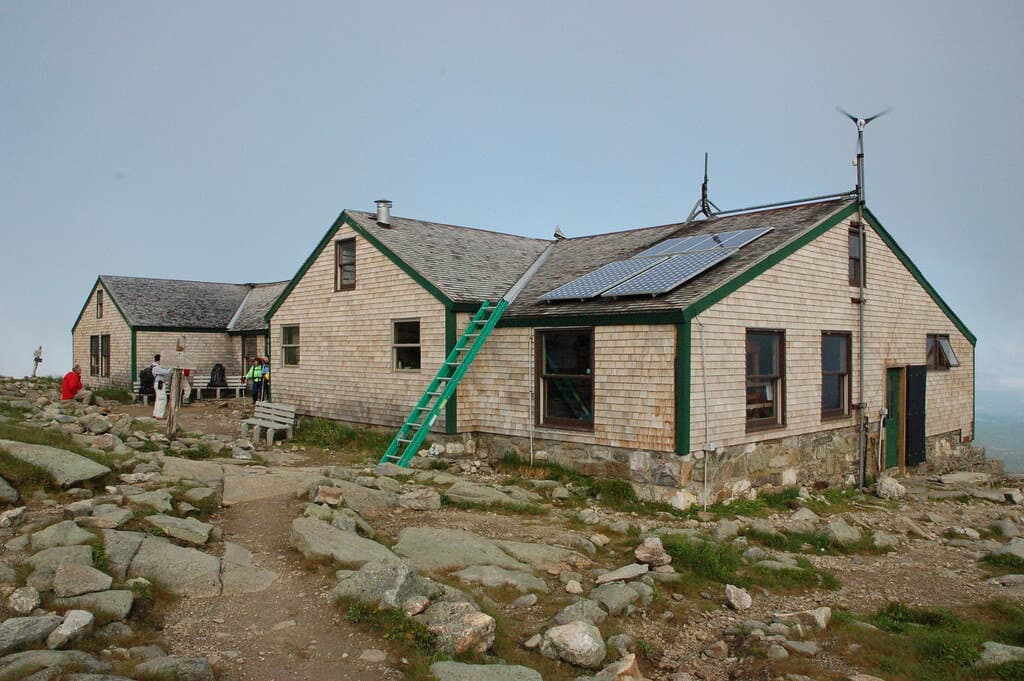
The cold end of the trail was even less of a contest. Lakes of the Clouds Hut, at 4,977 feet on the shoulder of Mount Washington, made the coldest list on 72 of 81 days and finished first on 57. Its unbroken run on the board lasted 25 days, from July 11 to August 4, and it held first place for 15 straight days in the middle of July. Madison Spring Hut, across the ridge, made the list 63 times.
| Shelter | Days on list | #1 | Coldest low |
|---|---|---|---|
| Lakes of the Clouds Hut NH | 72 | 57 | 31.8°F Sep 22 |
| Madison Spring Hut NH | 63 | 9 | 31.6°F Sep 21 |
| Gray Knob NH | 29 | 0 | 33.0°F Sep 21 |
| Guyot Shelter NH | 23 | 0 | 31.1°F Sep 18 |
| Roan High Knob Shelter TN | 10 | 5 | 38.0°F Sep 27 |
New Hampshire shelters held 83% of all coldest-list slots. The Presidentials don’t share.
Only one shelter south of New England ever won a coldest night: Roan High Knob, at 6,198 feet on the Tennessee line, five times in late September. Spaulding Mountain Lean-to in Maine took three. Everyone else was a guest.
By July 16 the entire coldest podium was already under 40°F, and it stayed there most of the season. The first posted freeze came late: Greenleaf Hut, 30°F, on September 18, with Kinsman Pond and Guyot at 31°F the same night.
July 16
On July 16 the morning post had Matts Creek at 99.4°F and Lakes of the Clouds at 38.1°F, a 61-degree spread on one trail, on one day, roughly 1,090 trail miles apart. The same morning produced the season’s biggest day-to-night swing, Bake Oven Knob in Pennsylvania going from 92°F to 61°F.
If you want one day that explains why ShelterCast forecasts at elevation rather than at the nearest town, it’s that one.
September didn’t get the memo
I expected the heat story to be a July story. It wasn’t. The week of July 13 to 19 was the summer’s peak, with the daily hottest shelter averaging 94.6°F. Then August settled into the upper 80s, and then the week of August 31 to September 6 came in at 94.3°F, within a third of a degree of the July peak. Six of the ten most frequent hot shelters set their season high between September 3 and 5, not in July.
Then the floor fell out. The week of September 21 to 27 averaged 78.7°F at the top of the hottest list, the coolest week of the season, and for the first time the hottest shelters were in North Carolina rather than Virginia as the James River valley cooled first. On the other list, the coldest first-place low slid from the mid-40s to 35°F over the same month.
The stat we never told you
The daily post computes one more thing each morning that it has never published: the shelter with the biggest gap between its daytime high and overnight low. The most frequent pick wasn’t a mountaintop. It was Velvet Rocks Shelter, a 994-foot valley shelter outside Hanover, New Hampshire, ten times. Cold air pools in valleys at night; the same geography that made it warm by day emptied the heat out after dark. Catawba Mountain Shelter in Virginia was second with seven. The single largest swing of the season belonged to Bake Oven Knob on that same July 16, 31 degrees between afternoon and dawn.
Next year
The daily post will run again next season, and I’d bet Matts Creek will do the same thing it did this year. If it does, that’s a line in next year’s wrap-up, not the headline. I’ll find a different story to tell. The data has more of them than I expected.
ShelterCast forecasts are planning estimates built from Open-Meteo data at each shelter’s elevation, not observations, and the daily post ranks only active shelters. Shelter and crossing data from NPS/ATC. Mileages are approximate trail miles.
Daily through hiking season, we post the trail’s 🔥 3 hottest
and 🥶 3 coldest shelters on BlueSky.